WASHINGTON, D.C. – More than half a million infants and toddlers experienced homelessness in the United States during the 2023–2024 program year, and most of it went unseen. New national data estimate that 513,539 children from birth through age three were affected, roughly one in every 29 infants and toddlers.
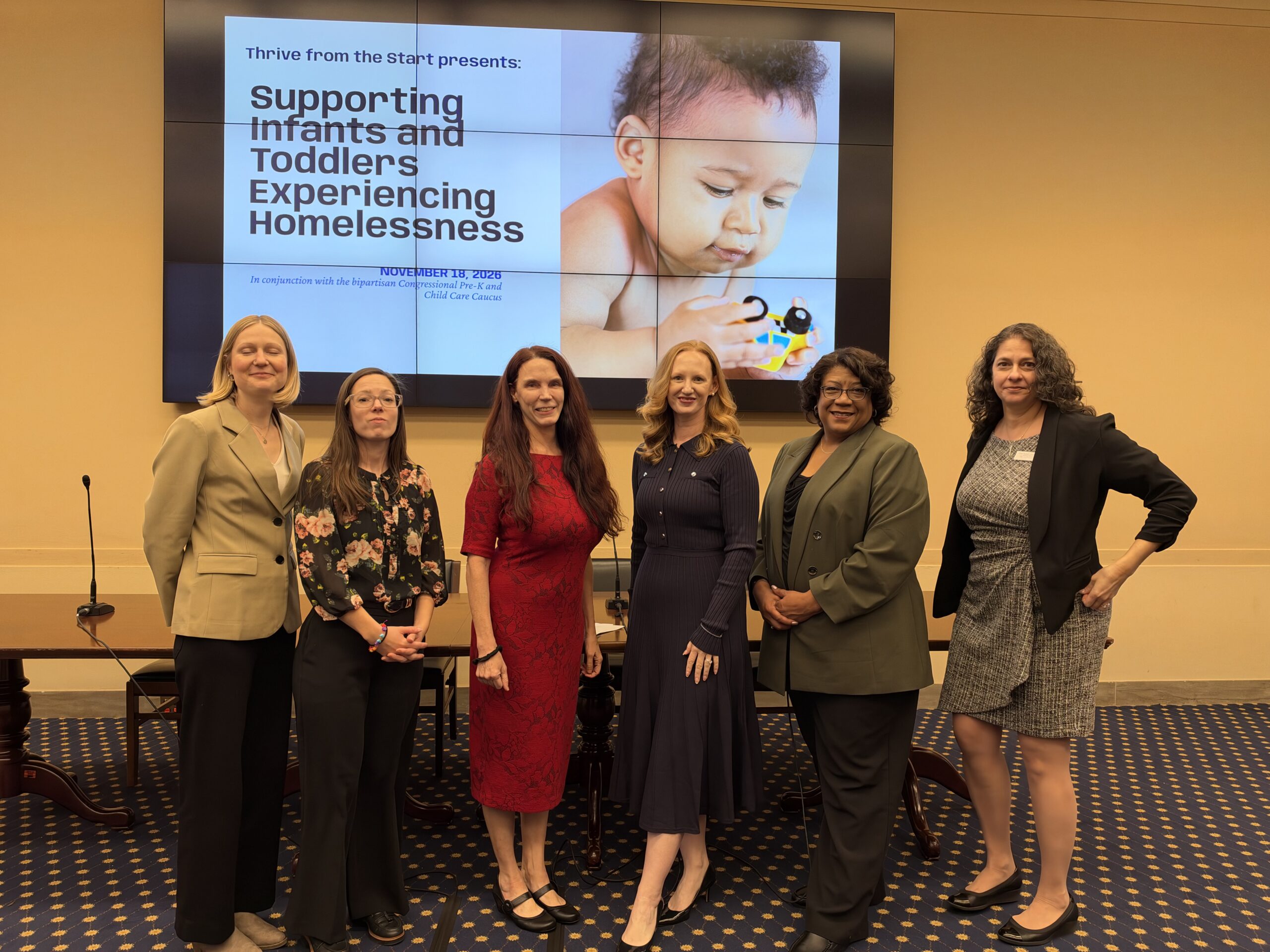
Today, parents, service providers, researchers and national advocates gathered on Capitol Hill for a bipartisan congressional briefing on what homelessness means for babies and their families, and how policymakers and systems can help families find and keep stable housing.
This Thrive From the Start briefing, hosted in conjunction with the bipartisan Congressional Pre-K and Child Care Caucus, brought together leaders in early childhood, housing, homelessness and health.
Homelessness among families with babies often doesn’t look the way people expect. Families may be staying in shelters or motels, living in cars or other unsafe places, or doubling up with other people after losing their housing or facing financial hardship.
The effects can last. Homelessness in infancy and toddlerhood is linked to poorer health and developmental delays, including in language, literacy and social-emotional skills.
Few families get the help they need. Fewer than one in ten infants and toddlers experiencing homelessness were enrolled in Early Head Start, a home visiting program or an early childhood program run by a local educational agency, according to a new national report from SchoolHouse Connection and Poverty Solutions at the University of Michigan.
Panelists from Indiana, Oregon and Georgia shared their own experiences and the work their organizations do directly with families, including:
“Family homelessness isn’t just a housing issue. For babies and the youngest children, even short periods of housing instability can affect healthy development, learning, stress levels, and long-term outcomes. The families we serve aren’t just looking for shelter. They’re trying to protect their children’s futures.” Elise Laubach, Executive Director, Family Promise of Tualatin Valley, Oregon.
“Our work has taught us that families who experience homelessness don’t need rescuing. What they need is support, connections to opportunity, and a real chance for them and their children to thrive.” Tyese Lawyer, President and CEO, Our House, Atlanta, Georgia.
“With the support of services that were available, I was able to go from being a new mom trying to survive homelessness to now becoming a Habitat for Humanity homeowner… ….I want you to know that’s what’s possible for families who receive the support.” Abbie Bennett, Parent Ambassador, Changent, Indiana.
The Thrive From the Start policy agenda calls on policymakers at every level to take a more coordinated approach: expanding access to shelter and affordable housing, connecting families with early childhood programs and support services, linking health care and housing services, and improving the collection and sharing of data on infant and toddler homelessness.
The briefing was supported by Changent, Corporation for Supportive Housing, Family Promise, the National Collaborative for Infants & Toddlers, National Network for Youth, People Serving People, Prevent Child Abuse America and SchoolHouse Connection.
Through Thrive From the Start, organizations across the country are working to raise awareness of infant and toddler homelessness and to build a more coordinated approach across the systems families rely on.
Homelessness among babies and toddlers is widespread, but it isn’t inevitable. Policymakers can help by connecting families with support earlier and building systems that work together, so more babies get the stable start they deserve.
Want to help spread the word? Check out our Partner Amplification Toolkit.