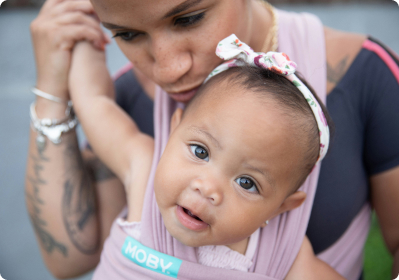
WASHINGTON — Thrive from the Start is encouraged by the enactment of the 21st Century ROAD to Housing Act, which reflects a bipartisan recognition that our country faces a housing affordability crisis and that the federal government has a role in solving it. We urge Congress to take the next step to address additional gaps by prioritizing families with the lowest incomes and families who have no homes at all and by ensuring that our homeless response system meets the needs of babies, their parents, and expectant parents.
Homelessness and housing instability during pregnancy or in a child’s first three years carry lifelong consequences for physical health, development, and mental well-being. Approximately 450,000 infants and toddlers experience homelessness each year, and nearly 70,000 babies are born to parents who experienced homelessness during pregnancy. These are among the families least visible in housing policy and most affected by it.
Thrive from the Start’s federal policy agenda provides a blueprint for solving and preventing homelessness among expectant parents and families with infants and toddlers. These families need tailored housing supports, including targeted rental assistance and vouchers, shelters designed for the developmental needs of young children, and assistance to prevent eviction and homelessness from occurring at all. They also need support beyond housing.
A child’s first three years are the most rapid period of brain development, making early developmental support – including access to health care and nutrition – urgent in its own right. Parents and expectant parents need economic security through education, job training, and income support, as well as prenatal and maternal health care. Just as important, families need these systems connected so that they do not have to struggle alone. That means aligning the definition of homelessness used by housing programs with the definition used by early childhood programs, so that families aren’t screened out of assistance based on where they slept. It also means navigation support across systems, so no family falls through the gaps.
Investments that reach expectant parents and families with infants and toddlers are among the most cost-effective our country can make, reducing the need for more intensive, expensive interventions later in life.
##
About Thrive from the Start:
Thrive from the Start brings together leaders from across the early childhood, housing, homelessness, health and child welfare systems dedicated to ensuring all expectant parents, infants, toddlers, and their families have the resources and opportunities to thrive. Thrive from the Start partners include ZERO TO THREE, SchoolHouse Connection, Prevent Child Abuse America, Housing Is, and the National Collaborative for Infants & Toddlers. Learn more about Thrive From the Start’s federal policy agenda focused on solving PN-3 homelessness and housing instability and our work to build a growing network of organizations committed to cross-sector solutions for a coordinated, holistic support system at https://thrivefromthestart.org/.
About ZERO TO THREE:
ZERO TO THREE works to ensure all babies and toddlers benefit from the family and community connections critical to their well-being and development. Since 1977, the organization has advanced the proven power of nurturing relationships by transforming the science of early childhood into helpful resources, practical tools, and responsive policies for millions of parents, professionals and policymakers. For timely expert insights on the latest developments in early childhood, from policy changes to research breakthroughs and what they mean for babies and families, check out our Behind the Headlines series. For more information, please visit zerotothree.org or follow us on LinkedIn, Instagram, Threads, Facebook and X.
About Housing Is:
Housing Is helps build a future where sectors work together to improve life outcomes. Based on the premise that housing stability is the critical foundation for low-income individuals and families and sectors can better meet needs through collaboration, Housing Is establishes, broadens, and deepens efforts to align affordable housing, education, and health systems to produce positive, long-term results. Learn more at housingis.org and on LinkedIn.
About the National Collaborative for Infants & Toddlers:
The National Collaborative for Infants & Toddlers (NCIT) brings together more than 500 organizations across the country to ensure every child – from prenatal to age three – has the foundation to thrive. We work alongside advocates in all 50 states and Washington, D.C., advancing policies that support infants, toddlers and their families while maximizing public investments at the community, state, federal and tribal levels. By uniting diverse voices and proven strategies, NCIT helps drive solutions that improve outcomes for children and families, strengthen the economy, and build more prosperous communities for all. Connect with us at ncit.org, Facebook, Instagram, or X.
About Prevent Child Abuse America:
Founded in 1972, Prevent Child Abuse America is the nation’s oldest and largest nonprofit organization dedicated to the primary prevention of child abuse and neglect before it happens. Through evidence-based programs, innovative policy solutions, and a growing nationwide network, we foster an ecosystem of support that empowers and strengthens families — one designed to ensure that all children and families are living a purposeful and happy life with hope for the future.
Learn more about our work at Prevent Child Abuse America and follow along with us on LinkedIn, Instagram, and Facebook to stay in the loop.
About SchoolHouse Connection:
SchoolHouse Connection is a national non-profit organization working to overcome homelessness through early care and education. We provide strategic policy advocacy and practical assistance in partnership with early childhood programs, schools, institutions of higher education, service providers, families, and youth. We publish an annual 50-state report on infant and toddlers experiencing homelessness and host a national family shelter community of practice. For more information, please visit schoolhouseconnection.org or follow us on LinkedIn, Instagram, Facebook, and YouTube.